
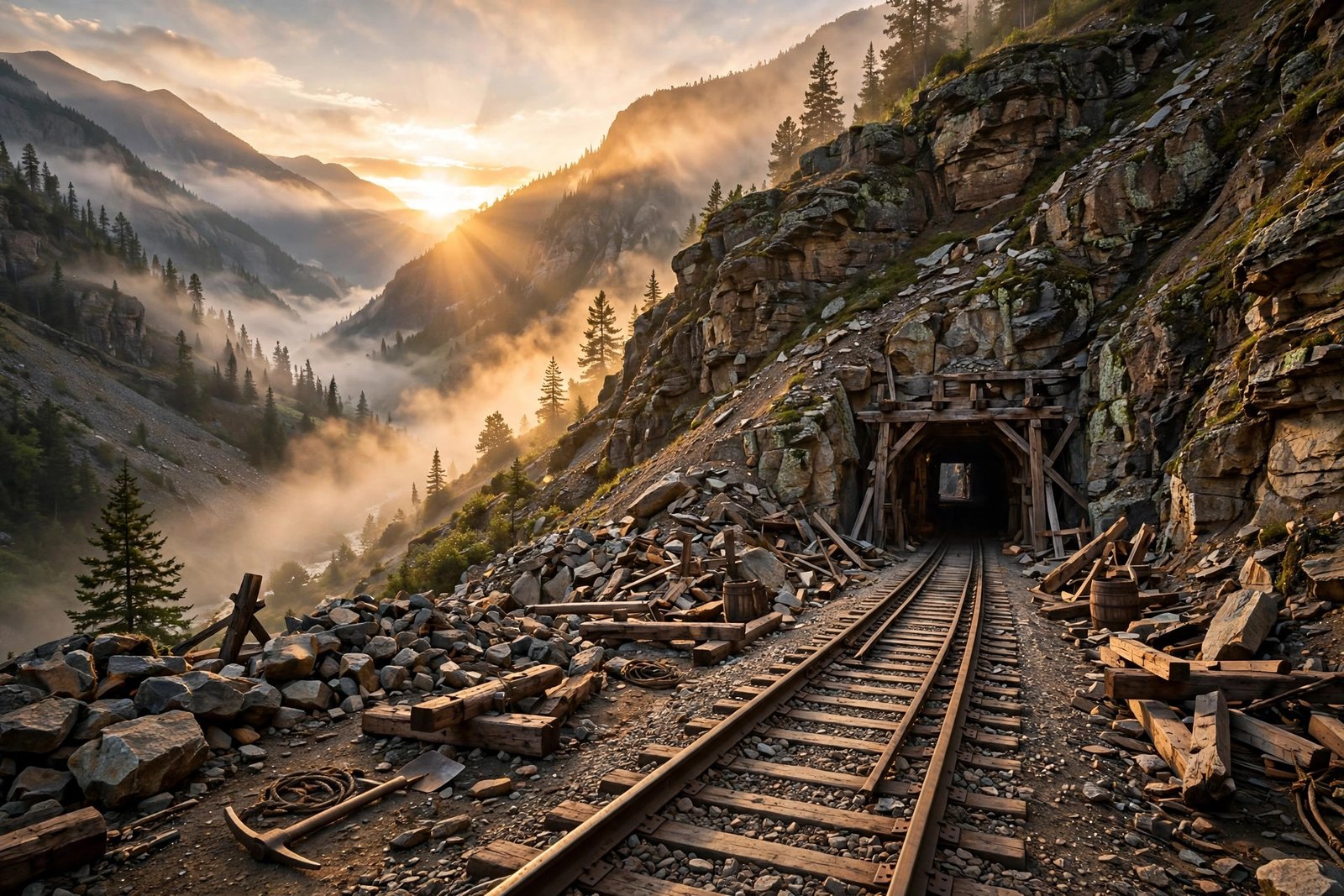
Ask a room full of Americans to name a folk hero, and sooner or later someone will bring up the steel-driving man who raced a machine and won. The John Henry legend has echoed through American culture for more than a century, carried in songs, stories, schoolbooks, and statues. It is a tale of muscle, pride, and a contest that could only end one way, and it still stirs something in anyone who has ever felt replaced by a machine. Whether you first heard it as a song or as a bedtime story, the legend invites the same question: was John Henry real, and does it matter?
In the story as most people tell it, John Henry was an African American steel driver working on the railroad tunnels that stitched the young nation together. His job was to drive a steel drill into solid rock with a heavy hammer, blow after blow, so that holes could be packed with explosives and the mountain could be opened a little further. It was brutal, skilled work, and John Henry was said to be the best at it. Then the company brought in a steam-powered drill, a machine that could do the work of many men, and John Henry challenged it to a contest: man against machine, hammer against steam. He won the race, the songs say, and then he fell dead, his hammer still in his hand.
The John Henry Legend and the Steam Drill Race
To understand the contest, it helps to picture the work. Before machines, tunnels were carved by hand. A steel driver swung a sledgehammer to drive a drill bit into rock while a partner turned the bit between blows, and the rhythm of the hammers set the pace of the whole job. Crews took pride in speed and endurance, and a man who could out-drill the rest earned respect that no paycheck could buy. When steam drills arrived, they did not just change the pace of work; they threatened the pride and livelihood of the men who had built their reputations on the hammer.
In the John Henry legend, the contest is simple and stark. The steam drill takes one side of the tunnel and John Henry takes the other, or the two race side by side through the same rock. The details change with every telling, and that is part of the point: singers and storytellers shaped the race to fit their audience. In the most popular versions, John Henry out-drills the machine and proves that a human being, at the peak of strength and skill, can still beat the newest invention. Then, spent by the effort, he collapses. Victory and death arrive together, and that pairing is what makes the story unforgettable.
The race has been read many ways over the years, and each reading keeps it alive:
- A contest between human skill and new technology, a theme every generation recognizes.
- A celebration of Black laborers whose strength and skill built much of America’s railroad network.
- A warning that progress has a human cost, even when the machine wins in the long run.
- A story about pride: John Henry does not race for money alone, but to prove his own worth.
Who Was the Real John Henry?
Here the story grows murkier, and honestly so. No single document has ever proven the identity of one historical John Henry, and historians still argue about the details. The most commonly named setting is the Big Bend Tunnel in West Virginia, built for the Chesapeake and Ohio Railway in the 1870s, and the town of Talcott nearby has embraced the connection. Other traditions point to the Lewis Tunnel in Virginia or to tunnel work in Alabama. The competing claims do not weaken the story; they suggest that the ballad hero may be a composite, built from the lives of many steel drivers rather than one man alone.
One influential theory was advanced by historian Scott Reynolds Nelson in his book Steel Drivin’ Man, which traced the figure to a formerly enslaved laborer whose trail runs through prison and railroad records. Other researchers have combed railroad payrolls, census rolls, and newspaper reports for a man who fits the songs, and they have found suggestive matches but no smoking gun. That uncertainty is worth stating plainly: the songs are evidence of how people felt about the work, not a court record of one man’s life. Readers who want certainty will not find it here, and that is part of the story’s honest charm.
What is certain is the world the songs came from. In the decades after the Civil War, Black laborers did much of the hardest railroad work in the South, often for low pay in dangerous conditions. Tunnel work meant dust, blasting, cave-ins, and long days underground. The ballad gave those workers a hero who looked like them, worked like them, and won, even if only for a moment. Whether or not one man swung that hammer, thousands of men lived the life behind the song.
Fact, Folklore, and the Lines Between
Separating fact from folklore is the most useful way to enjoy this story, so here is a plain version of each side:
- Likely fact: railroad tunnels were dug by hand by steel drivers before steam drills spread, and the work was dangerous and physically punishing.
- Likely fact: the ballad grew out of the world of Black railroad laborers in the late nineteenth century and spread through oral tradition.
- Legend: a single hero named John Henry beat a steam drill in a formal race and died on the spot, hammer in hand.
- Legend: the exact tunnel, date, and measurements of the race, which change from version to version.
Labeling the race as legend does not diminish it. Folklore is how working people recorded their own history when official records ignored them. The songs preserved the rhythm of the work, the pride of the crews, and the fear that machines would make skilled hands worthless. Those feelings were real even if the race itself was embroidered, and they are the reason the story survived when drier records did not.
Songs That Carried the Story
The ballad did most of the traveling. By the early twentieth century, versions of the song were being printed, collected by folklorists, and recorded, and from there it entered folk, blues, bluegrass, and country repertoires. Singers added verses, changed the tunnel, and adjusted the ending, which is why no two classic versions agree in every detail. Children learned it in school, workers sang it on the job, and each new audience found its own meaning in the hammer swings.
The story has since jumped to books, stage shows, and screen, including an animated retelling that introduced the hero to a new generation of children. That journey from work song to family entertainment shows how flexible the material is: the same tale can be a labor protest, a children’s adventure, or a meditation on technology, depending on who tells it. If you enjoy American folk stories, you can follow that thread through the country’s small towns and roadside landmarks, including the classic stops along our Route 66 road trip guide and the communities in our roundup of the most beautiful small towns in America.
Visiting John Henry Country Today
Travelers who want to stand where the story lives usually head to Talcott, West Virginia, a small town near the Big Bend Tunnel that is home to a statue of John Henry. The town has embraced its folk-hero connection, and a visit pairs naturally with a drive through the surrounding Appalachian hills, where the railroad history is still visible in cuts, bridges, and tunnel mouths. Check local listings before you go, since small-town events and opening details can change from season to season.
A John Henry-themed trip works best as part of a wider exploration of American places and stories:
- Start in Talcott and the Big Bend Tunnel area to see the landscape behind the songs.
- Add a scenic drive through the Appalachian region, where railroad towns still carry the era’s architecture.
- Pair the trip with other American landmarks from our guide to the best national parks in the USA to visit, which shows how the country’s big landscapes shaped its big stories.
- End the day with the ballad itself: listen to a few classic versions and notice how each singer changes the race.
Why the John Henry Legend Still Matters
Every generation finds a new machine to worry about, which is why this nineteenth-century story refuses to retire. Farmhands feared the thresher, factory workers feared the assembly line, and today office workers and artists wonder what artificial intelligence will do to their crafts. John Henry speaks to all of them, because his question is not really about a steam drill at all. It is about whether human skill, pride, and effort still count when a machine can do the job faster and cheaper.
The story also matters because of whose story it is. At a time when Black workers were rarely celebrated in mainstream culture, the ballad made a Black laborer the strongest, proudest, most skilled man on the mountain. That choice was radical in its own quiet way, and it is one reason the songs were treasured in Black communities and beyond. John Henry did not ask for permission to be great; he simply picked up his hammer and proved it.
That is why the John Henry legend endures. It is not a story about winning, since the hero dies and the machines eventually take over the tunnels anyway. It is a story about how you meet the moment: with everything you have, on your own terms, hammer in hand. If that idea moves you, explore more American legends here on Beauty of USA, share your favorite version of the ballad with someone who has never heard it, and keep an eye out for the folk heroes hiding in your own hometown’s history.