
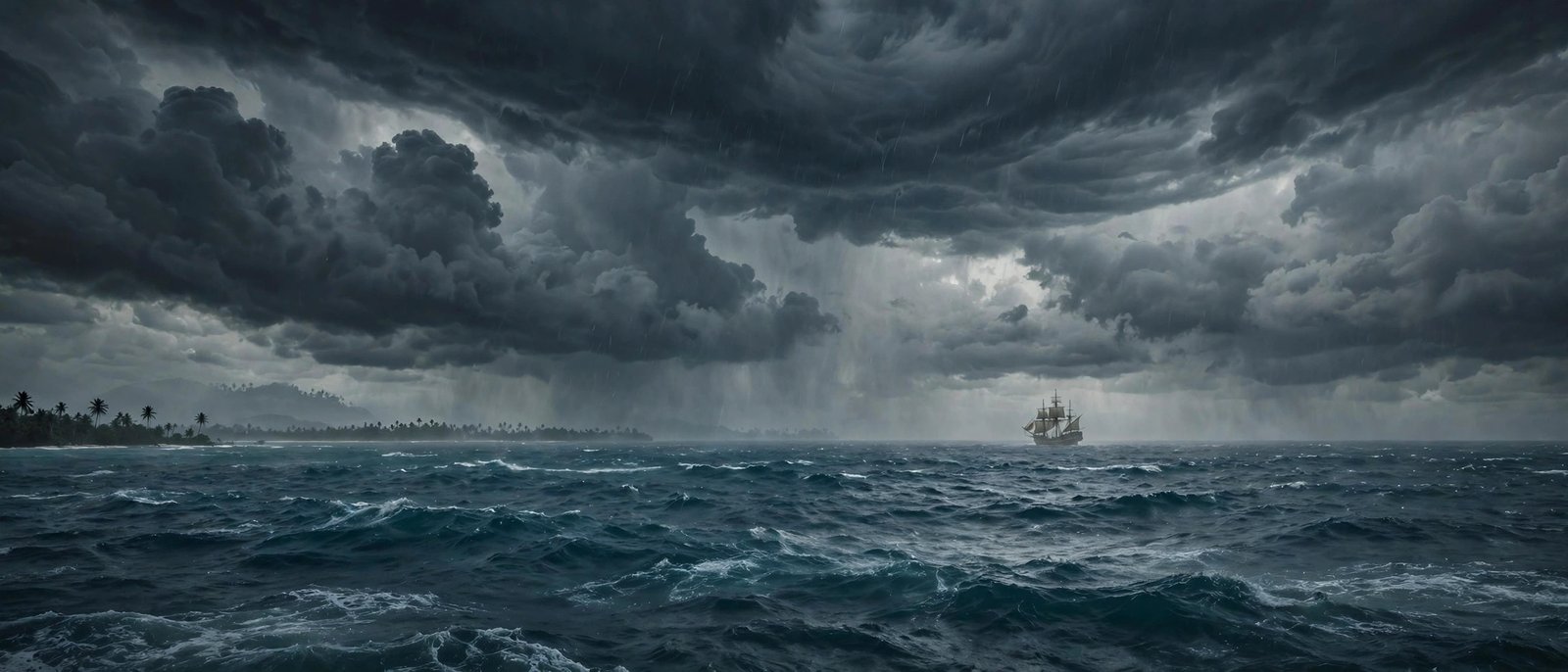
On the afternoon of December 5, 1945, five U.S. Navy torpedo bombers lifted off from Fort Lauderdale, Florida, on a routine training flight over the Atlantic. Within a few hours, all five planes and their 14 crewmen were gone without a trace. This is where the bermuda triangle legend truly begins — not with aliens or sea monsters, but with a genuine, documented tragedy that the world never got an answer for.
For more than half a century, this roughly triangular patch of ocean has been blamed for hundreds of missing ships and planes. Writers have filled it with everything from underwater alien bases to portals to another dimension. But what does the actual record show? Separating legend from fact reveals a story that is more interesting than the myth — a tale of stormy seas, human error, hungry journalism, and one of the busiest stretches of water on the planet.
Whether you are a skeptic, a believer, or just curious about America’s most famous mystery, this guide walks through the origins of the legend, the real disappearances behind it, what scientists and sailors actually say, and whether you can safely visit the region yourself. The truth, as usual, is stranger and more fascinating than the tall tales.
The Bermuda Triangle Legend: Where Did the Story Begin?
The phrase itself is younger than most people think. It was coined in February 1964 by writer Vincent Gaddis in an article for Argosy magazine titled “The Deadly Bermuda Triangle.” Gaddis stitched together a list of strange disappearances in the region between Miami, San Juan (Puerto Rico), and Bermuda, and gave the mystery a name that stuck.
The idea simmered for a decade before exploding into popular culture. In 1974, author Charles Berlitz published The Bermuda Triangle, a bestseller that treated the disappearances as evidence of something supernatural at work. Berlitz suggested everything from lost technology of Atlantis to magnetic anomalies, and the book sold millions of copies worldwide. Television specials, magazine covers, and movies followed, and the bermuda triangle legend became a permanent fixture of American folklore.
It is worth noting that earlier writers had already been circling the same waters. In 1968, Ivan T. Sanderson proposed that the Triangle was one of several “vile vortices” around the globe where electromagnetic weirdness supposedly disrupted instruments. Each retelling added new incidents — some real, some misplaced, some outright invented — until the region’s reputation seemed beyond question. As with many great American legends, from the Bigfoot legend explained by our earlier reporting to the haunting Mothman legend of Point Pleasant, the story grew fastest when facts were thinnest.
The Real Disappearances Behind the Bermuda Triangle Legend
Strip away the embellishments and a handful of genuinely puzzling cases remain. The most famous is Flight 19. On that December day in 1945, five Grumman TBM Avenger torpedo bombers took off from Naval Air Station Fort Lauderdale for a navigation exercise. The flight leader, Lieutenant Charles Carroll Taylor, became convinced his compasses had failed. Recorded radio transmissions captured his growing confusion as he tried to find his way back to land. His final instructions were chilling: when the first plane ran low on fuel, they would all ditch together.
What happened next deepened the mystery. A PBM-5 Mariner rescue plane with 13 crewmen took off to search for the missing bombers — and it never returned either. A ship in the area reported seeing a mid-air explosion, and the Navy concluded the Mariner had likely blown up, as that aircraft type had a known problem with fuel vapor leaks. Twenty-seven men were lost in a single day, and the Navy’s official report closed the case with the haunting phrase “cause unknown.”
Another frequently cited case is the USS Cyclops, a U.S. Navy collier that vanished in March 1918 while sailing from Barbados to Baltimore with 309 people aboard. No distress call was ever received. The Navy itself admitted that “many theories have been advanced, but none that satisfactorily accounts for her disappearance.” Wartime secrecy fueled speculation, though historians note the ship was overloaded and one of its engines was out of service.
Later incidents often folded into the legend include the British airliners Star Tiger (lost January 1948) and Star Ariel (lost January 1949), both of which vanished on routes near Bermuda in an era when long-distance navigation was far less reliable than today. Some storytellers also mention ghost ships like the Ellen Austin, a vessel supposedly found drifting with its crew missing — but researchers have been unable to verify that tale in any historical record, so it belongs firmly in the folklore column rather than the fact column.
Bermuda Triangle Legend vs Fact: What Science Actually Says
The legend began to unravel in 1975, when librarian and pilot Lawrence David Kusche published The Bermuda Triangle Mystery — Solved. Kusche did something radical: he checked the original sources. He combed through newspaper archives, weather records, and Coast Guard reports for the incidents Berlitz had described. What he found was damning for the mystery.
Many of the “mysterious” disappearances had happened during documented storms. Some vessels listed as vanished had actually returned to port safely. Others had disappeared far outside the Triangle’s supposed boundaries, or their cargoes and conditions made their loss unsurprising. In case after case, the mystery evaporated when the boring facts were restored. Kusche’s work remains the single most important reality check on the bermuda triangle legend.
Official agencies agree. The U.S. Coast Guard states that it does not recognize the Bermuda Triangle as an area of specific hazard, and that its reviews of losses in the region found nothing indicating casualties resulted from anything other than physical causes. The National Oceanic and Atmospheric Administration (NOAA) puts it plainly: the ocean has always been a dangerous place when foul weather or poor navigation is involved, and there is no evidence that mysterious disappearances occur with any greater frequency in the Bermuda Triangle than in any other large, well-traveled area of the ocean.
Even the insurance industry is unimpressed. Lloyd’s of London, the famous marine insurance market, does not charge higher premiums for ships passing through the region. That is a powerful fact: the people who risk real money on the odds of ships sinking see nothing special about these waters. Context matters, too. The Triangle sits astride some of the busiest shipping lanes in the Western Hemisphere, with constant traffic between North America, the Caribbean, and Europe. More traffic means more accidents — and more stories.
Rational Explanations for the “Curse”
So if nothing supernatural is going on, what explains the disappearances? Researchers point to a combination of very ordinary dangers, amplified by myth.
- Violent, fast-changing weather: The region breeds tropical storms and hurricanes. Waterspouts and sudden squalls can overwhelm small craft, and in the age before satellite weather forecasting, ships sailed into storms they never saw coming.
- The Gulf Stream: This powerful ocean current races through the region at several knots. It can quickly scatter wreckage and debris, making a sunken vessel or downed plane nearly impossible to find — which makes a loss look “mysterious” when it is really just unrecoverable.
- Compass variation: Navigators must correct for the difference between magnetic north and true north. In parts of the Triangle, that variation is unusually large, and a pilot or captain who failed to adjust could steer badly off course. (Ironically, one spot in the region has near-zero variation — so sailors accustomed to correcting elsewhere could be thrown off.)
- Human error: Many lost vessels were overloaded, poorly maintained, or sailed by inexperienced crews. The USS Cyclops, Flight 19’s confused leader, and aging aircraft of the 1940s all fit this pattern.
- Methane hydrates: One hypothesis suggests that eruptions of methane gas from the seafloor could reduce water density and sink ships. It is a real scientific idea, but it remains unproven for any specific Triangle disappearance — treat it as speculation, not fact.
None of these explanations requires rewriting physics. They only require accepting that the ocean is vast, weather is violent, and people make mistakes — especially in an era before GPS, radar, and modern communications.
Why the Bermuda Triangle Legend Refuses to Die
If the evidence is so one-sided, why does the legend still thrive? Part of the answer is simple economics: mystery sells. Berlitz’s book spawned an industry of documentaries, tours, and souvenir shops. Each generation rediscovers the story through a new film or viral video, and the legend refreshes itself.
Psychology plays a role too. Humans are pattern-seeking creatures. When a ship vanishes in the North Atlantic, it is a tragedy; when it vanishes inside an imaginary triangle, it is a mystery. The boundary itself is arbitrary — nobody agrees on exactly where the Triangle’s corners are — so almost any disappearance in the western Atlantic can be swept into the collection. Once a story is labeled mysterious, confirmation bias does the rest.
There is also genuine romance in the unknown. Like the best of America’s true stories behind its legends, the Triangle speaks to something deep: the idea that the map still has blank spaces, that the modern world has not explained everything. That feeling is real even if the mystery is not — and it keeps the legend alive long after the facts have been settled.
Can You Visit the Bermuda Triangle?
Absolutely — and millions of people do it every year without incident. The region covers the waters between Florida, Bermuda, and Puerto Rico, which means countless cruise ships, cargo vessels, and commercial flights cross it daily. Bermuda itself is a stunning British Overseas Territory famous for pink-sand beaches, while Puerto Rico offers the historic streets of Old San Juan and the glowing waters of its bioluminescent bays.
If you want a taste of the legend, book a cruise from Miami to Bermuda, visit the small museum exhibits on maritime history in Key West, or simply sail the same blue waters where Flight 19 once flew. Bring sunscreen, respect the weather forecasts, and remember that the only thing truly dangerous about the Triangle is underestimating the sea — which is true of every ocean on Earth.
The bermuda triangle legend endures because it is a great story. But the real story — of brave airmen lost in 1945, of sailors battling storms, of a librarian who dared to check the facts — is better. It reminds us that America’s legends are worth loving, but the truth is always worth knowing. If this deep dive into myth versus fact fascinated you, explore more of the country’s strangest tales and share this article with a fellow mystery lover — and the next time someone brings up the Triangle at a dinner party, you will have the facts on your side.