
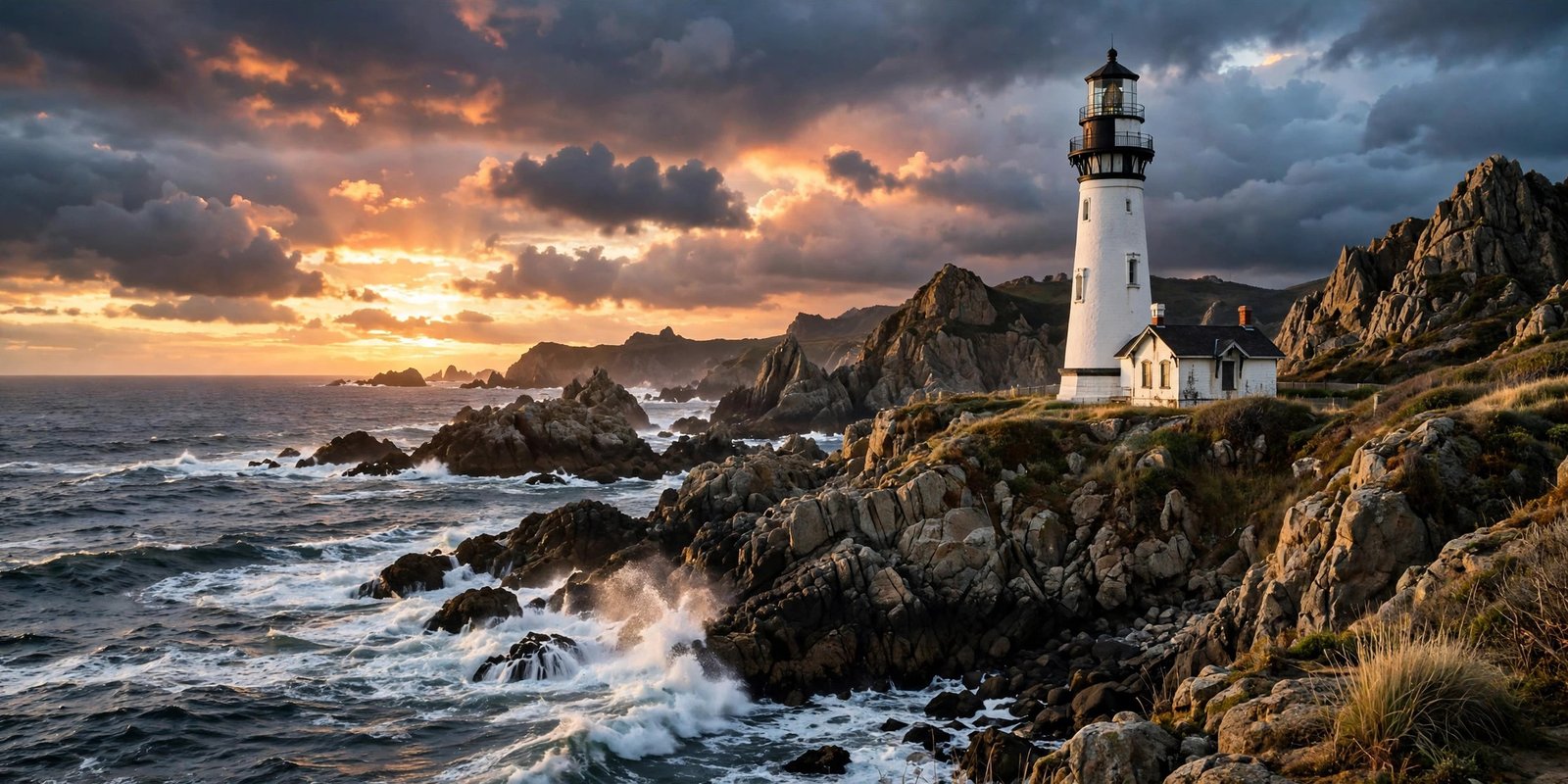
There is something timeless about a lighthouse standing alone against the sea. Long before radar, satellites, and GPS, these tall towers were the difference between a safe arrival and a shipwreck on a dark and rocky shore. These US lighthouses facts show why lighthouses became symbols of hope, courage, and homecoming all along the coasts of America, from the cold waters of Maine to the warm Gulf shores of Florida and Texas, and even along the Great Lakes far from any ocean.
Today, many lighthouses no longer guide ships every night, but they still draw millions of visitors. People climb their spiral stairs for sweeping views, photograph them at sunrise and sunset, stay overnight in former keeper cottages, and learn the stories of the men and women who kept the lights burning through storms. Whether you love history, architecture, coastal road trips, or simply beautiful places, lighthouses offer a perfect mix of all three.
US Lighthouses Facts That Will Surprise You
One of the most surprising US lighthouses facts is that America did not invent the lighthouse, but it quickly made the idea its own. The first lighthouse in the American colonies was Boston Light, built on Little Brewster Island in Boston Harbor in 1716. That first tower was destroyed during the American Revolution, and the tower visitors see today dates to 1783. It remains an active aid to navigation and is often described as the oldest light station in the United States.
Another surprise is how many lighthouses America once needed. At the height of the lighthouse era, hundreds of lights marked harbors, river mouths, reefs, and lake shores across the country. Some were tall brick towers on cliffs, others were small lights on piers, and some were lightships anchored offshore where building a tower was impossible. Together, they formed a national safety system long before modern electronics existed.
Lighthouses were also early examples of federal public works. After independence, the new federal government took responsibility for lighthouses, beacons, and buoys. In 1789, Congress passed a law placing lighthouses under federal care, a reminder that safe shipping mattered to the whole young nation, not just to one port town. For travelers today, that history is part of what makes a lighthouse visit feel like a visit to American history itself.
- Boston Light in Massachusetts, first lit in 1716, is the oldest light station in the United States.
- Sandy Hook Light in New Jersey, built in 1764, is the oldest surviving original lighthouse tower still standing in the country.
- Cape Hatteras Light in North Carolina, at 210 feet tall, is the tallest brick lighthouse in the United States.
- Many historic lighthouses are now open as museums, with keeper quarters, exhibits, and tower climbs.
The Oldest and Tallest Lighthouses in America
If you want to start a lighthouse road trip, begin with the oldest. Sandy Hook Light, also called the Sandy Hook Lighthouse, has stood at the entrance to New York Harbor since 1764. Unlike Boston Light, its original tower survives, which makes it a rare link to colonial America. Visitors can walk the grounds of Fort Hancock and see a tower that guided ships before the United States was even a country.
Portland Head Light in Cape Elizabeth, Maine, is another early American icon. Authorized in the late 1780s and first lit in 1791, it stands at the entrance to Portland Harbor and is one of the most photographed lighthouses in the world. Its white tower, red roof on the keeper house, and rugged rocky shore look exactly like the lighthouse image many people carry in their minds.
At the other end of the scale is Cape Hatteras. The black-and-white spiral tower on the Outer Banks of North Carolina rises 210 feet and warns ships away from the Diamond Shoals, an area long known as the Graveyard of the Atlantic because of its shifting sands and dangerous currents. The tower was famously moved inland in 1999 to protect it from beach erosion, a remarkable engineering project that kept this landmark safe for future generations.
Other tall lights include the Ponce de Leon Inlet Light in Florida, which stands 175 feet tall and is the tallest lighthouse in that state, and the Cape Charles and Barnegat lights that mark busy East Coast waters. On the West Coast, towers tend to be shorter because they often sit on high cliffs, so the light itself can still shine far out to sea even from a modest tower.
How Lighthouses Actually Worked
Early lighthouses used simple fires, candles, or oil lamps, and their light did not travel very far. The great breakthrough came with the Fresnel lens, developed in France in the 1820s by Augustin-Jean Fresnel. This clever arrangement of glass prisms could focus a lamp into a powerful beam visible for many miles, while using far less fuel than older systems. Over time, American lighthouses adopted Fresnel lenses of different sizes, and the largest lenses were true works of art as well as engineering.
Each lighthouse also had its own light character, a pattern of flashes and pauses that told sailors which light they were seeing. One light might flash every ten seconds, another might show a fixed light, and another might alternate colors. Mariners used charts listing these characters to identify their position at night, much like reading a signature in light. Painted patterns, known as daymarks, served the same purpose during daylight. That is why one tower is striped black and white, another is solid red, and another is white with a black top.
Fog was another danger, because a light cannot be seen through thick fog. Many stations added fog signals, first bells and whistles, later powerful foghorns and sirens. Some stations also used radio beacons in the twentieth century. Together, light, sound, and later radio gave ships several ways to find safety even when they could not see the shore.
Lighthouse Keepers and Life on the Edge
Before automation, every lighthouse depended on its keeper. Keepers trimmed wicks, filled lamps with oil, polished lenses, wound clockwork mechanisms that rotated the lens, painted towers, repaired buildings, and kept detailed logs of weather, passing ships, and incidents. The work was daily, physical, and lonely, especially at remote stations where supplies arrived only by boat and storms could cut off contact for days.
Another of the lesser-known US lighthouses facts is that women played an important role as keepers. When a keeper died or became ill, his wife or daughter often took over the work, sometimes for many years. Ida Lewis, keeper of Lime Rock Light in Newport, Rhode Island, became famous in the nineteenth century for rowing out to rescue people from the harbor, and her story helped change ideas about who could do this demanding job. Other women keepers served quietly at stations across the country, keeping lights burning through long winters and rough seas.
Life as a keeper also meant life as part of a small coastal community. Children of keepers often grew up climbing towers, helping with chores, and learning to read weather and water. Many keeper families took pride in a spotless lens and a light that never failed, because they knew sailors depended on it. That sense of duty is a big reason lighthouses still inspire respect today.
More US Lighthouses Facts for Curious Travelers
Lighthouses were not only built on ocean coasts. The Great Lakes have some of the most beautiful and historic lighthouses in America, because lake shipping faced storms, fog, and rocky shores just as dangerous as the sea. Split Rock Lighthouse in Minnesota, built on a high cliff above Lake Superior in 1910 after a terrible storm wrecked ships in 1905, is now one of the most visited historic sites in the state. Its setting, perched above blue water and forested cliffs, looks almost unreal in photographs.
On the West Coast, lighthouses tell a different story of gold rush shipping, foggy headlands, and remote cliffs. Heceta Head Light in Oregon, Point Reyes Light in California, and Pigeon Point Light in California each combine dramatic scenery with fascinating histories of keepers, shipwrecks, and rescues. Many West Coast towers are shorter than East Coast towers because the cliffs themselves provide height, but their lights are just as powerful.
If you enjoy coastal drives, lighthouses pair naturally with other beautiful places. A trip along the Maine coast, the Outer Banks, the Florida Keys, or the Lake Michigan shore can easily include several lights in one day. For more ideas for scenic American journeys, see our guide to the best national parks in the USA to visit and the most beautiful waterfalls in the USA, which often sit near the same coastal and lake regions as historic lights.
Famous Lighthouses You Can Visit Today
Among the best-known US lighthouses facts for travelers is that many historic lights are open to the public and well worth a climb. Portland Head Light in Maine offers easy access, a small museum in the former keeper house, and postcard views in every season. Nubble Light, formally Cape Neddick Light in York, Maine, sits on a tiny island just offshore and is best viewed from Sohier Park across the water.
On the Outer Banks, visitors can climb Cape Hatteras, Bodie Island, and Ocracoke lights, each with its own color pattern and story. In Florida, the St. Augustine Lighthouse and Maritime Museum combines a tower climb with exhibits about shipwrecks, keeper life, and maritime archaeology. In Michigan, the state with more lighthouses than any other, lights such as Point Betsie, Grand Haven, and the Mackinac area lights make a perfect lake-shore road trip.
Some lighthouses even offer overnight stays. Former keeper houses at a few stations have been turned into bed-and-breakfasts or vacation rentals, letting guests fall asleep to the sound of waves and wake up beside a working or historic tower. If you prefer a beach day to go with your lighthouse stop, our guide to hidden beaches in the USA can help you find a quiet stretch of sand near many coastal lights.
Haunted Legends and Folklore
Many lighthouses come with ghost stories, and it is important to separate legend from documented fact. The stories are part of local folklore, not verified history, but they add to the mystery of these lonely towers. Heceta Head Light in Oregon is famous in folklore for the story of a keeper daughter said to haunt the house, while St. Augustine Lighthouse in Florida is linked in local legend to the spirits of children who once played nearby. Visitors enjoy these tales on evening tours, but historians note that the documented keeper records tell a more ordinary, and often more moving, story of hard work and family life.
Other legends grew from real dangers. Shipwrecks, storms, and rescues gave coastal towns powerful memories, and those memories sometimes turned into stories told around fires and on tours. Enjoying a ghost tour is a fun way to experience a lighthouse after dark, but the true history of keepers, engineers, and sailors is impressive enough on its own, without any ghosts.
Why Lighthouses Still Matter Today
Modern ships now use GPS, radar, and electronic charts, so lighthouses are no longer the primary guide for most navigation. Many lights remain active, however, as backup aids and as markers for small boats, fishermen, and recreational sailors. The United States Coast Guard still maintains many aids to navigation, while nonprofit groups, state parks, and local societies care for historic towers, restore lenses, and welcome visitors.
Lighthouses also matter as symbols. They appear on postcards, in paintings, in novels, and in films because they stand for guidance, safety, endurance, and hope. In a storm, a steady light means someone is watching and help is near. That image still speaks to people today, even if they have never been to sea.
Preservation matters, too. Salt air, storms, and erosion constantly wear down towers, so restoration is ongoing work. Climbing fees, museum shops, donations, and volunteer hours help keep roofs repaired, lenses polished, and stairs safe. When you visit a lighthouse and pay a small admission fee, you are helping protect a piece of American heritage for the next generation.
These US lighthouses facts are just the beginning. Every tower has its own story of builders, keepers, storms, and rescues, and every coast has lights waiting to be discovered. Plan a lighthouse stop on your next coastal road trip, climb the stairs slowly, look out over the water from the top, and imagine the night watch that once kept that beam turning. Then share your favorite lighthouse with friends and family, and start planning the next one. The coast of America is full of lights, and each one is worth the visit.